Global Accessibility Awareness Day
Kat discusses the importance of online accessibility for all and suggests 6 top tips for digital creators to be more inclusive.
Global Accessibility Awareness Day is a great time to have a conversation about digital accessibility. This year is the GAAD 15th anniversary and the GAAD Foundation’s goal is to:
“disrupt the culture of technology and digital product development to include accessibility as a core requirement.” *
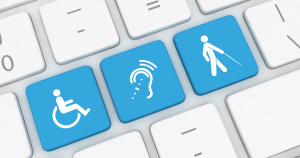
So, why is digital accessibility important?
Creating accessible content ensures that you are being inclusive and not excluding a significant part of the population. It therefore widens your audience. Some people may feel like taking accessibility into account is a limitation, whereas actually it is an advantage.
Roughly 1 billion people worldwide are disabled and may experience barriers to inaccessible technology that doesn’t consider visual, hearing, motor or cognitive impairments *.
It’s not just important for creators, but also for digital consumers to not feel ignored and restricted by content they want to engage with.
The physical environment presents barriers to disabled people in so many ways, but the technological world can be easily made more accessible.
Here at Possability People we follow the Social Model of Disability, which understands disability as being a result of social attitudes, physical environments and non-inclusive policies. The Social Model recognises that societal barriers are what restrict independence, control and choices for disabled people **. In the technological era we are living in, we need to find ways to break down this new wave of obstacles experienced by some disabled people navigating the online world.
6 top tips for improving digital accessibility
There are small but important things that you can do to make what you present online more accessible. How about trying these 6 top tips:
- using high contrast text
- including Alt text on images
- aligning text to the side rather than the centre
- keeping your language accessible
- not overcrowding images
- having one clear goal for each piece of content
These simple changes can make a big difference.
If you create online content, then it’s worth having a search and reading about accessibility guidelines and suggestions. You may come across ideas for minimal changes that could be a big help to someone else. Go back and look through your old content with a different mindset, see what may be overstimulating for a neurodivergent person, what text might be hard to follow for a dyslexic person, if you can add Alt text to images for people using screen readers. The more people you cater to, the vaster your reach. Good accessible design benefits everyone, not just disabled people.
Where can I learn more about making digital content accessible?
We recommend looking at accessibility experts like Ability Net, they have a very useful resources page on their website.
You can check the readability of your content by using a contrast checker such as WebAIM’s
How do Possability People approach online accessibility?
We work hard at making our online presence, social media content and website available to as many people as possible. We want the information we present to be useful to everyone.
Our web developers are committed to working by the best practices in accessibility guidelines. Our Communications Team are trained in being mindful of accessibility and continue to educate themselves about new ideas for inclusion. Our website includes the functions to search words, change text size and change colours for alternative contrast.
But we are always open to feedback, we want our online community to grow and be available to a wide and diverse audience!
You can find out more about our online accessibility here.
Sources: