
Feed your mind with Spoon Theory
Kat explores the origins, benefits and concept of Spoon Theory
Have you ever heard people using the phrase ‘spoonie’ or heard someone say they have used up all their spoons for the day?
Ever wondered what that means?

Spoon Theory is a really useful tool for explaining how people who live with chronic fatigue handle pacing their energy. It’s simple, energy for tasks = spoons, and spoons are limited.
This concept is used by lots of people, it can be applied to many chronic health conditions that cause pain and fatigue, neurological conditions and mental health issues.
Spoon theory can work for anyone who struggles to manage day-to-day tasks, social situations and self-care due to their health impacting their energy.
So, where did it come from?
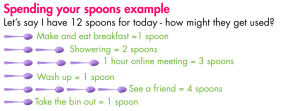
Christine Miserandino lived with Lupus and was asked by a friend over lunch how she managed life with her condition. Christine gathered up all the spoons available and used them to depict a metaphorical scenario where each spoon represented a unit of energy. She used 12 spoons to illustrate the concept, and explained that each task she completed in a day used up a quota of spoons. A smaller task, like eating breakfast may be one spoon, whereas a bigger task such as going to the shop may use more. How many spoons you use varies by day, by task and by person so there is no set rule and only the spoonie themselves can guess what their spoon spending will be for each activity*.
The problem is, if you only have say 12 spoons for a day (sometimes more, sometimes less), then what do you do if you use up all your spoons and still have things to do? You might have an important appointment or need to go to a social event, the house may need attention, or you might have children to look after. Well, you can borrow spoons from the next day if your body allows you to. But then tomorrow, you have less spoons and may not be able to find the energy to do everything that you need to.
How does spoon theory actually help?
Figuring out how many spoons you have per day and managing them effectively is called ‘pacing’. Pacing can be a helpful way of managing fatigue. Is it always possible? No, life happens. But when it works, it can help. It helps prevent a ‘boom and bust’ pattern where some days you achieve everything, but then the days that follow are much worse.
When living with conditions that cause fatigue, it can be tough to make others understand why some days it is possible to do more than others, why you may be less present or cancel at the last minute, and why simple tasks can feel like a mammoth challenge. Spoon theory gives a really simple and visual way of showing people what you’re up against. More than that, it’s created community among disabled people and those with chronic health conditions, where support can be offered and stories shared via the popular spoonie hashtags and groups.